Triton Summer School
The Triton Marine Robotics Mastery Programme
Four weeks. Two MIT courses. Piraeus, June 2026.
The opportunity
Autonomous marine systems are moving from research to procurement across defence, offshore energy, and commercial maritime — and the engineering gap is large. Most organisations working in this space have no systematic way to build the hardware and software skills required in-house.
The Triton programme is the only place in Greece and Southeastern Europe where engineers can acquire the complete stack: platform design and systems integration in Course 1, autonomy software and multi-vehicle field operations in Course 2. The curriculum is identical to MIT's campus offering, taught by the same faculty, with the same on-water hardware. No comparable programme exists in the region for 2026.
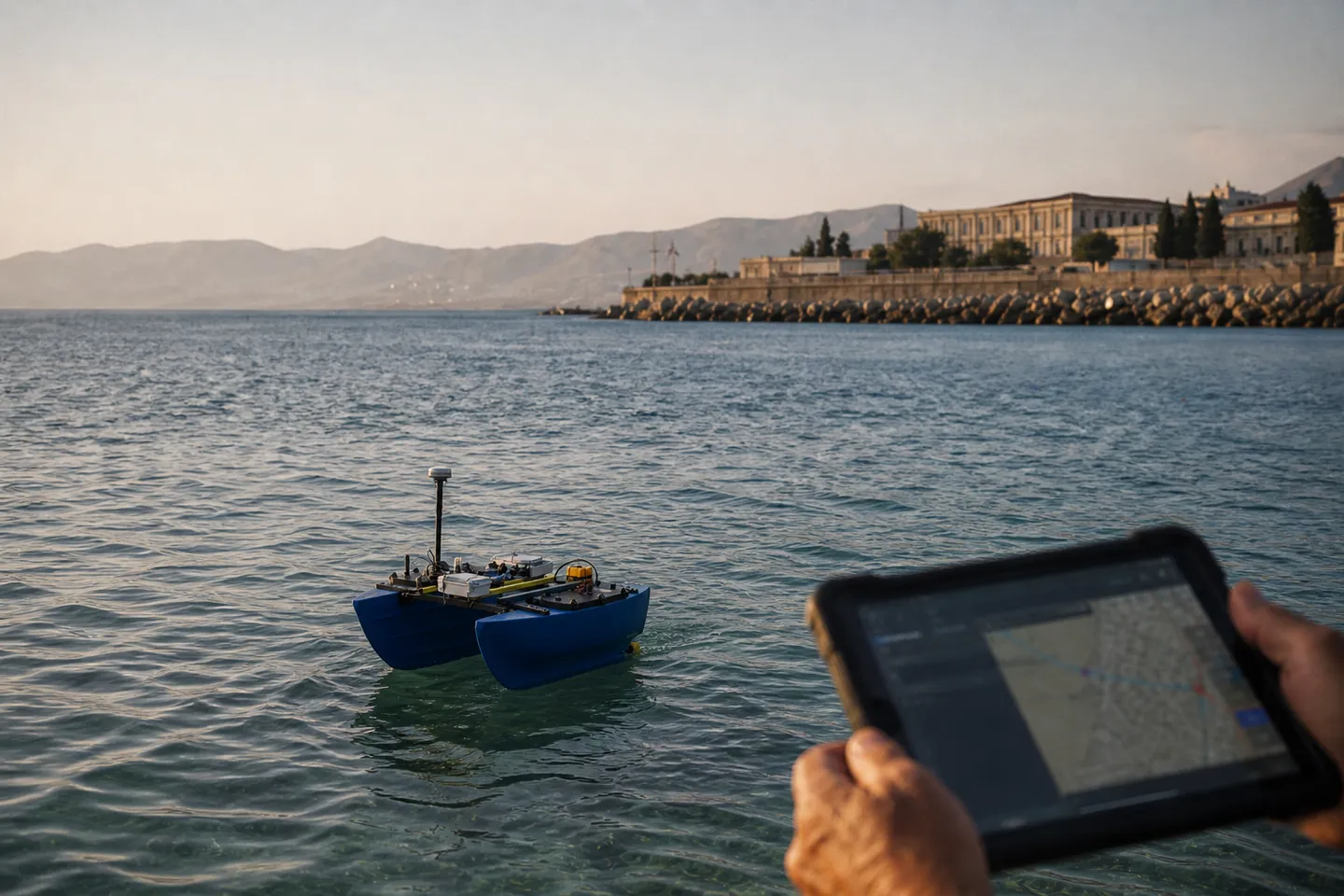
The training platform is an autonomous surface vehicle. The engineering skills — sensors, control, MOOS-IvP autonomy software — transfer directly to UUV programmes and larger autonomous platforms, making the programme relevant whether your organisation's focus is surface, subsurface, or both.
Why now, why this
Greece's growing investment in defence innovation, EDF programmes, and NATO maritime autonomy requirements are creating defined near-term demand for teams that can design, operate, and write technical specifications for autonomous marine systems. The procurement and partnership patterns that form in this window will persist for years.
Organizations that send engineers to the Triton programme in 2026 will have an MIT-certified engineering capability on record before most of their regional competitors have begun to address the gap. The commercial maritime sector is moving toward autonomous inspection, survey, and patrol; offshore energy is expanding autonomous asset monitoring; defense procurement timelines are accelerating.
The timing is structural, not opportunistic. ELKAK and MIT Faculty created the foundation to make these capability blocks available outside Cambridge for the first time. It will not be available indefinitely.
Two complementary capability blocks
Marine Robotics — Platform Design
June 1–12, 2026
Two weeks of lecture-then-lab instruction in systems thinking, electronics, marine sensors, control fundamentals, and mechanical elements, culminating in Week 2's on-water race day. You leave with a working autonomous surface vessel your team designed and built.
Course 1 details →Marine Autonomy — Autonomy Software
June 15–26, 2026
Week 1 is simulation-intensive: autonomy architectures, MOOS-IvP, multi-vehicle coordination. Week 2 puts that software into water with real USVs and a three-day competitive multi-vehicle finale. You leave with hands-on field operations experience and MOOS-IvP proficiency.
Course 2 details →Organizational outcomes
Platform Design and Integration Capability
Your engineers can specify, build, and configure the hardware layer of a marine robotic system — sensors, actuators, power, and control — applicable to USVs, UUVs, and larger autonomous platforms.
Autonomy Software and Field-Operations Proficiency
MOOS-IvP proficiency and in-water multi-vehicle mission experience — rare outside MIT.
Substantive Material for Proposal and Bid Development
Lab results, certifications, and mission logs that strengthen HCDI and EDF proposals.
Network Access
Work alongside Hellenic Armed Forces engineers and defence professionals in the same cohort. Direct working relationships with MIT faculty and the people who will shape regional marine autonomy programmes.
How the programme works
- Location
- Hellenic Naval Academy, Piraeus, Greece. On-water sessions on the adjacent harbour.
- Format
- Full-time, in-person. Lecture-then-lab daily. On-water competitions in Week 2 of each course.
- Language
- English throughout.
- Certification
- MIT Open Learning certificate on completion, issued per course.
- Faculty
- MIT Sea Grant and MIT Mechanical Engineering. Full bios on the faculty page.
- Participant background
- Engineers and technical professionals. No minimum degree requirement. Course-specific prerequisites apply.
- Preparatory materials
- Pre-course modules provided to enrolled participants approximately one month before the programme begins.
At a glance
| Category | Marine Robotics | Marine Autonomy |
|---|---|---|
| Dates | June 1–12, 2026 | June 15–26, 2026 |
| Focus | Platform design, electronics, sensors, control, and team design-build-test of an autonomous surface vehicle. | Autonomy software, MOOS-IvP, multi-vehicle coordination, mission planning, and in-water field operations. |
| Hands-on output | A team-built, race-ready autonomous surface vessel. | MOOS-IvP proficiency and in-water multi-vehicle mission experience. |
| Class size | 30 participants | 30 participants |