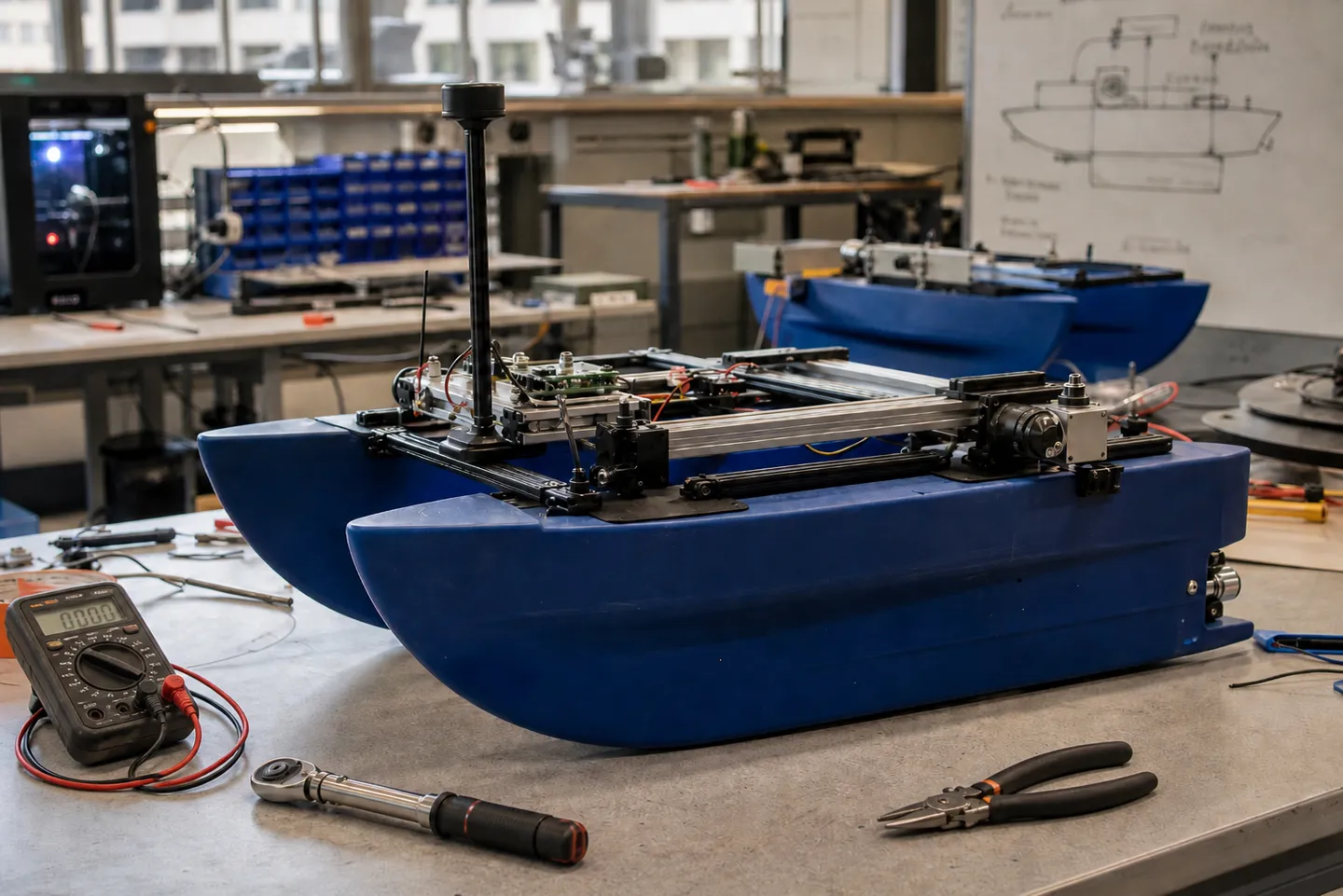
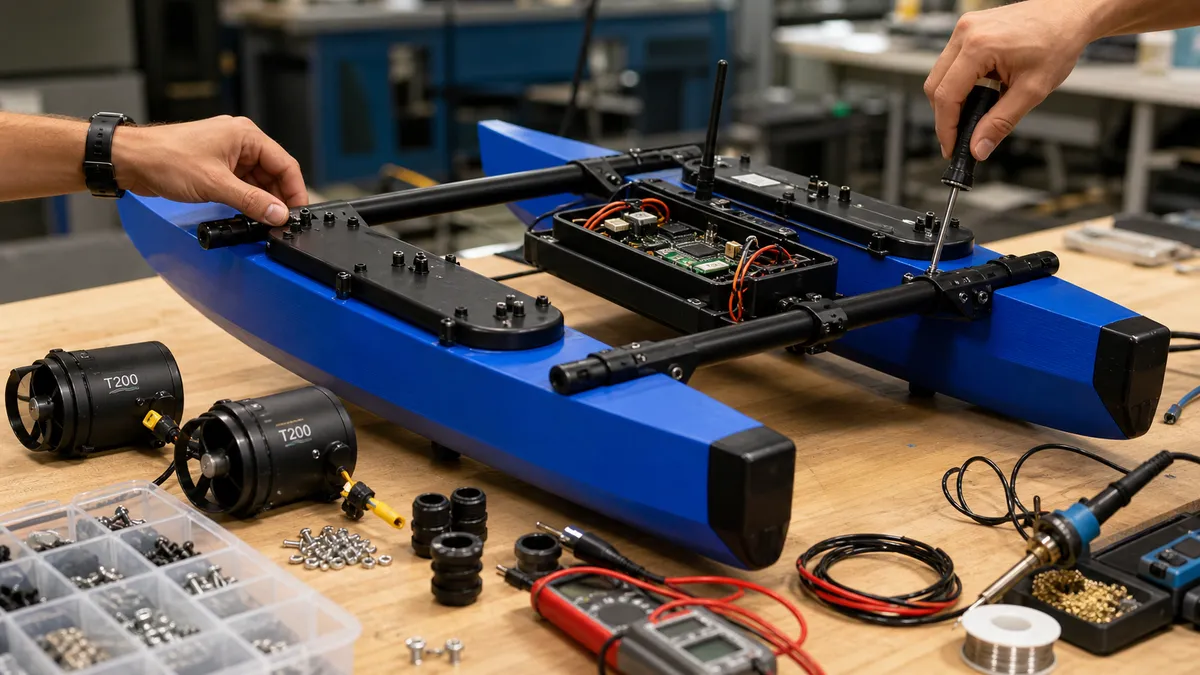
University lab workbench with partially-assembled autonomous surface vessel components

Triton Summer School

Marine Robotics

Based on MIT course 2.017 — An Introduction to Marine Robotics

Design, build, program, test, and race a team-built autonomous surface vessel. June 1–12, 2026.

The opportunity

Autonomous surface and underwater vehicles have moved from research programmes to active procurement. Defence organisations, offshore energy companies, and maritime survey operators are all hiring engineers who can build and integrate these systems — but structured training at the hardware level is almost nonexistent outside a handful of universities. MIT 2.017 is the course that closes that gap. In two weeks, you go from fundamentals to a team-built, on-water autonomous vehicle. The sensors, actuators, control architecture, and systems-integration discipline you develop are directly applicable to USV and UUV platforms at any scale.

Why this course, why now

Autonomous surface vehicle engineering sits at the intersection of systems integration, embedded electronics, control theory, and marine operations. No single prior background covers all of it. MIT 2.017 compresses the complete engineering stack — from concept to race-day competition — into two weeks of focused instruction and hands-on build time. For engineers entering marine autonomy for the first time, it is the most direct path to fluency with the physical layer. The hardware skills — sensors, control systems, actuators, and system integration — apply equally to underwater and larger autonomous platforms.

What you will learn

Structured approaches to decomposing a complex marine robotic system into subsystems, defining interfaces, managing integration, and communicating design intent across a team.

Practical electronics for embedded systems: microcontrollers, motor drivers, power systems, basic PCB layout, and diagnostic instrumentation relevant to small autonomous vehicles.

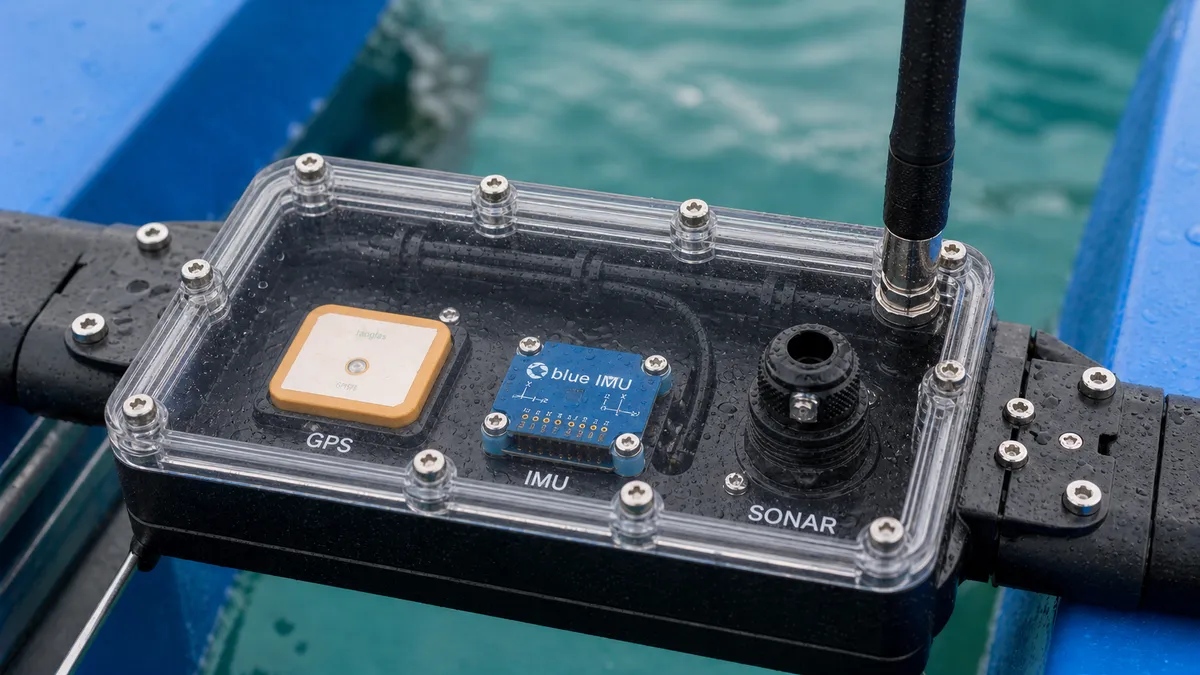
Selection, calibration, and integration of sensors (GPS, IMU, sonar, cameras) and actuators (thrusters, servos) in a marine environment — including waterproofing and cable management considerations.

Introductory feedback control theory applied to the heading and speed control of a surface vehicle: PID tuning, simulation with MATLAB Simulink, and verification against on-water behaviour.

Structural and mechanical design for a compact marine platform: frame materials, fastener selection, sealing, propulsion mounting, and considerations for hydrodynamic drag.

Engineering project management at team scale: work breakdown, daily lab cadence, design review presentation, and the discipline of iterating against a fixed on-water test deadline.

How the course works

Lecture-then-lab every day. Week 2 is all build and water.

Week 1 — Instruction and Integration

Introduction to marine robotic systems. Decomposition exercise. Team assignment. Hardware overview. Initial design review.

Microcontroller programming basics. Power system design. Motor driver lab. Wiring standards.

GPS, IMU, and sonar integration. Sensor fusion concepts. Data logging. Debugging techniques.

Feedback control principles. MATLAB Simulink simulation of heading and speed control. PID tuning exercise.

Formal mid-week design review (June 5). Teams present integration status. Faculty feedback. Finalise Week 2 build plan.

Week 2 — Build, Test, and Race

Full team build sprint. Subsystem integration. Bench testing. Software-hardware debugging. Iterative testing in controlled conditions.

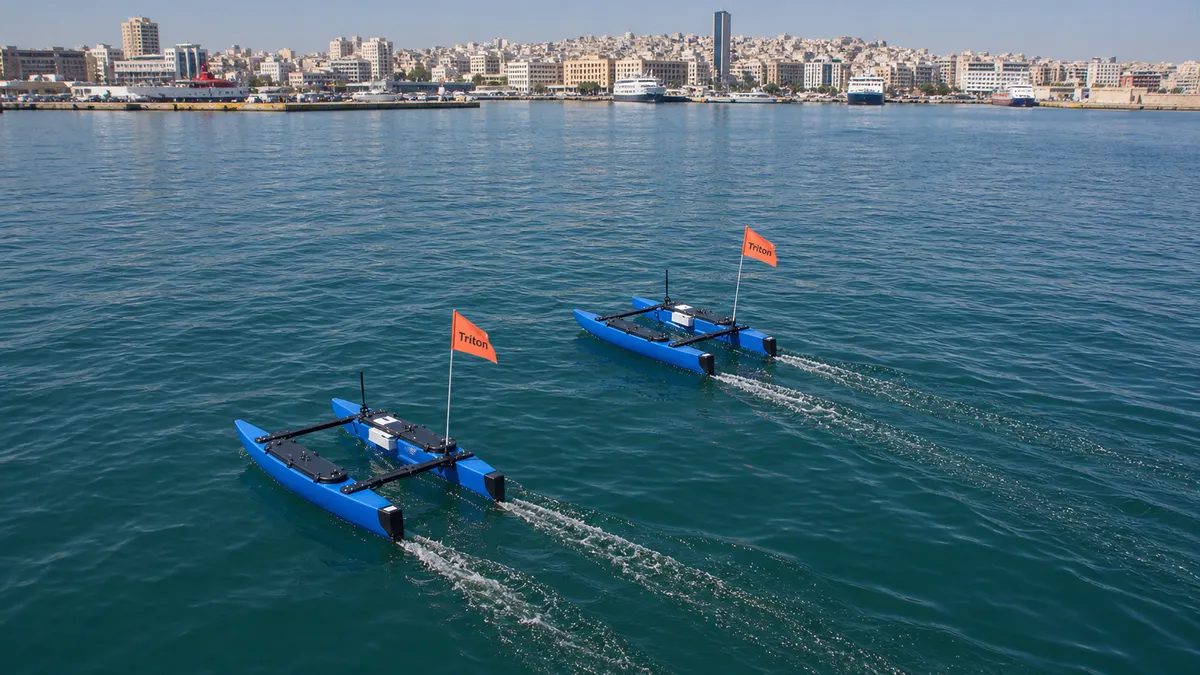
Progressive on-water testing sessions at the Naval Academy harbour. Tune heading and speed controllers. Validate mission execution. Safety protocols briefing.

The competition: Race A (speed/manoeuvrability) and Race B (autonomous mission). All teams compete with their own-built vehicle. MIT faculty judging. Certificate ceremony.

Course Highlights

Who should attend

The programme is designed for engineers and scientists ready to move from conceptual understanding to hands-on operational competence. Typical participants include:

  • Marine and naval engineers seeking direct experience with autonomous surface and underwater vehicle systems.
  • Robotics and systems engineers expanding into maritime applications (from aerospace, ground robotics, or industrial automation backgrounds).
  • Defence R&D professionals preparing for procurement, proposal, or program management work involving unmanned systems.
  • Systems integrators evaluating marine autonomy platforms and software frameworks.
  • Researchers in ocean science, environmental monitoring, or offshore energy seeking to add autonomous vehicle capabilities.
  • Technical team leads building organisational competence in marine robotics.
  • Engineers and scientists from organisations planning to respond to HCDI R&D 2026 calls or similar European defence and maritime innovation programmes.

Why attend

Capability, not credentials. The programme certificate documents that your engineer has designed, built, and field-tested an autonomous surface vehicle under MIT instruction — not that they attended a lecture series. Lab notebooks, code, and hardware configurations come home too.

Substantive material for proposals. Organizations submitting HCDI 2026 bids or EDF proposals can reference MIT-certified marine autonomy training by named engineers, with documented on-water mission results.

Requirements and preparation

Prerequisites
General familiarity with the Windows operating system is expected. Basic first-year programming experience in any language is a plus but not required. No prior knowledge of robotics, simulation software, or marine systems is assumed.
Laptop
Windows required. A Mac with a Windows VM is acceptable. Detailed software installation instructions will be provided before the course.
Software
MATLAB and Simulink. Licence provided or bring your own institutional licence.
Pre-course module
Enrolled participants are required to complete a short (~2-hour) online MATLAB Simulink course before arrival. This must be completed before the course begins. All remaining MATLAB Simulink and robotics-specific training is delivered during the course itself.

Full prep materials and software setup →

Programme details

Dates June 1–12, 2026
Location Hellenic Naval Academy, Piraeus, Greece
Format Full-time in-person intensive, Monday–Friday
Duration 2 weeks (10 days of instruction)
Language English
Class size 30 participants maximum
Lead instructor Michael Triantafyllou (MIT Sea Grant and MIT MechE)
Instructors David Barrett and Andrew Bennett (MIT Sea Grant)
Certificate MIT Open Learning certificate on completion
Organiser StartSmart SEE, MIT authorised facilitator in Greece

Instructors

David Barrett — Professor of the Practice, MIT Mechanical Engineering

DavidBarrett

Professor of the Practice, MIT Mechanical Engineering

Full faculty bios →

Supported by MIT teaching assistants from the Department of Mechanical Engineering.

Reserve a seat in Marine Robotics.

Open-market seats are limited.

Apply