
Michael Triantafyllou
Doherty Professor; Director, MIT Sea Grant
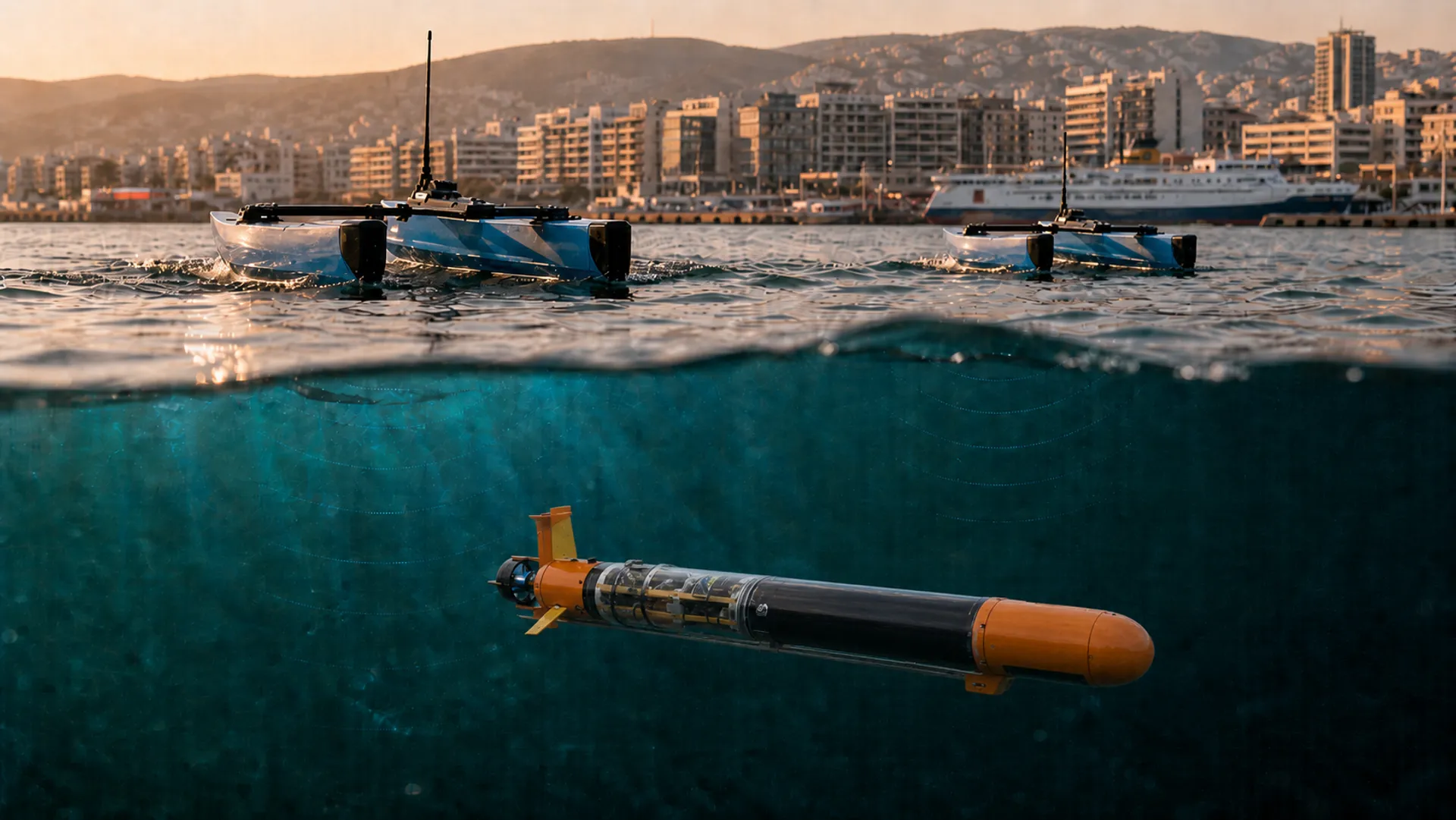
Two consecutive two-week courses, delivered by StartSmart SEE and taught by MIT Sea Grant and MIT Mechanical Engineering faculty for the first time outside Cambridge, Massachusetts.
Two consecutive two-week courses, delivered by StartSmart SEE and taught by MIT Sea Grant and MIT Mechanical Engineering faculty, for the first time outside Cambridge, Massachusetts. MIT 2.017 covers the design, build, and on-water test of an autonomous surface vessel. MIT 2.680 covers the autonomy software that runs on it — using the same open-source MOOS-IvP framework taught at MIT. Capped at 30 participants per course. MIT Open Learning certificate on completion. Surface vehicles are used as training platforms throughout; the engineering methods, sensors, and autonomy software apply equally to autonomous underwater systems.
| Category | Marine Robotics | Marine Autonomy |
|---|---|---|
| Dates | June 1–12, 2026 | June 15–26, 2026 |
| Focus | Platform design, electronics, sensors, control, and team design-build-test of an autonomous surface vehicle. | Autonomy software, MOOS-IvP, multi-vehicle coordination, mission planning, and in-water field operations. |
| Hands-on output | A team-built, race-ready autonomous surface vessel. | MOOS-IvP proficiency and in-water multi-vehicle mission experience. |
| Class size | 30 participants | 30 participants |
Marine autonomy is one of the few remaining robotics domains where no global leaders have consolidated. The organizations that build engineering capability in 2026 will set the procurement patterns, partnership structures, and technical standards of the next decade.
HCDI's 2026 funding calls, EDF programmes, and NATO maritime autonomy requirements are creating a defined near-term demand for teams that can design, operate, and write technical specifications for autonomous marine systems. The Triton programme is the only place outside MIT where that capability can be built under MIT faculty instruction in a single, concentrated four-week window.
Four capabilities that compound over time.
Your engineers can specify, build, and configure the hardware layer of a marine robotic system — sensors, actuators, power, and control — skills applicable to USVs, UUVs, and larger autonomous platforms.
Hands-on MOOS-IvP proficiency and in-water multi-vehicle mission experience — rare outside MIT. MOOS-IvP is used in active naval USV and UUV programmes worldwide; the skills are platform-transferable.
Documented lab results, certifications, and hands-on mission logs that strengthen HCDI and EDF proposals.
Work alongside Hellenic Armed Forces engineers and defence professionals in the same cohort. Direct working relationships with MIT faculty and the people who will shape regional marine autonomy programmes.

Certificate
Awarded on completion of each course
Early reservation recommended.
Tiered pricing scales with the number of seats. Pricing details on request.
ApplyThe Summer 2026 Triton Programme in Greece is an initiative led by ELKAK (the Hellenic Centre for Defence Innovation). StartSmart SEE, as MIT's sole authorised facilitator in Greece, has secured commercial access to this programme for the broader Greek ecosystem.
We use cookies to measure site traffic via Google Analytics. Read our Cookie Policy and Privacy Notice.