Faculty and Teaching Team

Instruction is led by MIT Sea Grant and MIT Mechanical Engineering faculty, with MIT Lincoln Laboratory.

Marine Robotics Instructors

Based on MIT course 2.017 — An Introduction to Marine Robotics, June 1–12, 2026

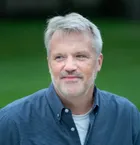
Michael Triantafyllou — Henry L. and Grace Doherty Professor in Ocean Science and Engineering; Director, MIT Sea Grant

Michael Triantafyllou

Henry L. and Grace Doherty Professor in Ocean Science and Engineering; Director, MIT Sea Grant

MIT Department of Mechanical Engineering

Lead Instructor, MIT 2.017

Prof. Michael S. Triantafyllou is the Henry L. and Grace Doherty Professor in Ocean Science and Engineering at MIT and Director of the MIT Sea Grant College Program. Born and educated in Athens — he graduated from the National Technical University of Athens in Naval Architecture and Marine Engineering before earning his SM and ScD at MIT — he is internationally recognised as the founding figure of modern bio-inspired marine robotics. He pioneered the biomimetic robots RoboTuna (now in the permanent collection of the Science Museum, London, and the MIT Museum), RoboPike, and RoboTurtle, and has authored more than 370 journal and conference papers on biomimetic robotics, dynamics and control of marine systems, and experimental fluid mechanics. He is a Fellow of the American Physical Society and a Life Fellow of the Society of Naval Architects and Marine Engineers.

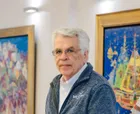
David Barrett — Professor of the Practice in the Mechanical Engineering Department at MIT

David Barrett

Professor of the Practice in the Mechanical Engineering Department at MIT

MIT Department of Mechanical Engineering

Dr. David Barrett is Professor of the Practice in the Mechanical Engineering Department at MIT, with more than 25 years of leadership in robotics R&D across academia, industry, and entertainment. He earned his PhD and MS in Ocean Engineering and MS in Mechanical Engineering from MIT. As a doctoral student in MIT's Towing Tank in the 1990s under Prof. Triantafyllou, he designed and built the original RoboTuna — the world's first biomimetic robotic fish, now in the permanent collection of the Science Museum, London. Prior to his faculty career he was Vice President of Engineering at iRobot Corporation, a Director at Walt Disney Imagineering, a Research Engineer at MIT's Artificial Intelligence Laboratory, and Technical Director at Draper Laboratory. He holds 15 patents.

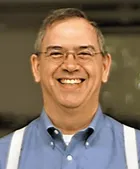
Andrew Bennett — Senior Lecturer, MIT Department of Mechanical Engineering

Andrew Bennett

Senior Lecturer, MIT Department of Mechanical Engineering

Education Administrator, MIT Sea Grant College Program

Dr. Andrew Bennett is a Senior Lecturer in MIT's Department of Mechanical Engineering and Education Administrator at the MIT Sea Grant College Program, where he co-teaches MIT 2.017J (Design of Electromechanical Robotic Systems). He brings more than 35 years of R&D experience developing robotic systems for land, sea, and air. From 1991–1997 he worked in the MIT AUV Lab on the Sea Squirt, Odyssey I, Odyssey II, and the WHOI Autonomous Benthic Explorer (ABE). Subsequent roles include Draper Laboratory, Walt Disney Imagineering R&D, iRobot (Program Manager for the PackBot, a unit of which is in the Smithsonian), VP for R&D at Scientific Systems Company, and director of the SCOPE programme at Olin College. In 2019 he founded Point Road Solutions. He holds a BS (MIT, 1985), MS in Mechanical Design (Stanford, 1986), and PhD in Ocean Engineering (MIT, 1997).

Supported by MIT teaching assistants from the Department of Mechanical Engineering.

Marine Autonomy Instructor

Based on MIT course 2.680 — Marine Autonomy, Sensing and Communications, June 15–26, 2026

Michael Benjamin — Principal Research Scientist, MIT Department of Mechanical Engineering

Michael Benjamin

Principal Research Scientist, MIT Department of Mechanical Engineering

Director, MIT Marine Autonomy Lab (PavLab)

Lead Instructor, MIT 2.680

Dr. Michael R. Benjamin is a Principal Research Scientist in MIT's Department of Mechanical Engineering and the Center for Ocean Engineering, where he leads the MIT Marine Autonomy Lab (PavLab). His research focuses on autonomy algorithms and software for unmanned marine vehicles, including multi-objective behaviour-based decision-making, COLREGS-compliant collision avoidance, and multi-vehicle coordination. In 2006 he founded MOOS-IvP, a widely deployed open-source marine autonomy framework that runs on dozens of platform types, from Bluefin and Iver AUVs to Clearpath Heron USVs and autonomous sailboats. He has developed and taught MIT 2.680 (Unmanned Marine Vehicle Autonomy, Sensing, and Communications) since 2012. He holds MS/PhD degrees in Computer Science from Brown University and before MIT was a research scientist at the Naval Undersea Warfare Center, where he was named 2005 NAVSEA Scientist of the Year. In 2014 he led MIT's winning team at the International Maritime RobotX Challenge.

Supported by MIT teaching assistants from the Marine Autonomy Lab and MIT Lincoln Laboratory.

About MIT Sea Grant and the Marine Autonomy Lab

MIT Sea Grant is a cooperative programme between MIT and the US National Oceanic and Atmospheric Administration (NOAA) that supports research, education, and outreach in ocean and coastal engineering. The programme's marine robotics work spans autonomous surface and underwater vehicle design, ocean sensing, and field-deployable systems. seagrant.mit.edu

The MIT Marine Autonomy Lab (PavLab), led by Michael Benjamin, develops the open-source MOOS-IvP autonomy software that underpins MIT 2.680. The lab conducts field research in multi-vehicle coordination, human-robot interaction, and autonomous maritime operations. MOOS-IvP is used by research institutions and defence organisations worldwide. oceanai.mit.edu/pavlab

MIT Sea Grant and NOAA